应用范围 / Application
一体化污水处理设备适用于住宅小区、村庄、公共建筑(如饭店、学校、医院)、交通设施(如车站、机场)、工业园区以及旅游景区、养殖场等分散式场景,主要用于处理生活污水及性质相近的工业有机废水,特别适合水量较小(通常10~500 m³/d)、场地有限、对出水水质要求较高的项目。
Integrated wastewater treatment equipment is suitable for residential communities, villages, public buildings (such as restaurants, schools, and hospitals), transportation facilities (such as stations and airports), industrial parks, as well as decentralized scenarios like tourist attractions and farms. It is mainly used for treating domestic sewage and industrial organic wastewater with similar properties. It is particularly ideal for projects with relatively small wastewater volumes (typically 10-500 m³/d), limited space, and high requirements for effluent quality.
产品特点 / Product Features
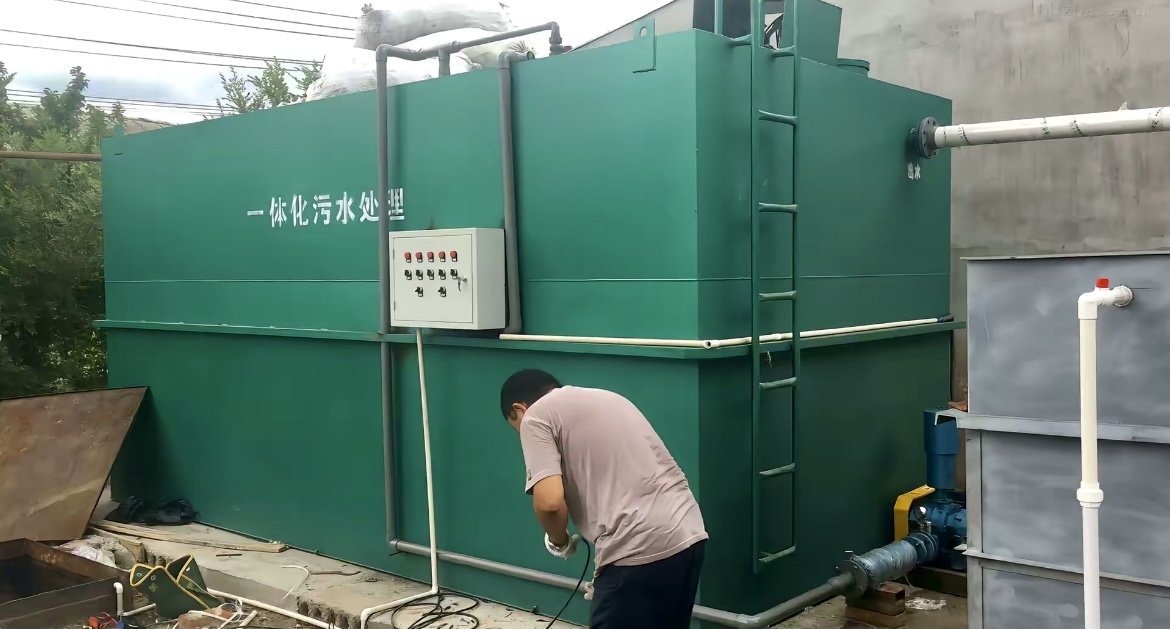
集预处理、生物处理、深度处理、消毒及智能控制于一体
Integrates pretreatment, biological treatment, advanced treatment, disinfection, and intelligent control into one unit
高度集成,相比常规设备可节约占地 20% 以上
Highly compact, saving over 20% in floor space compared to conventional equipment
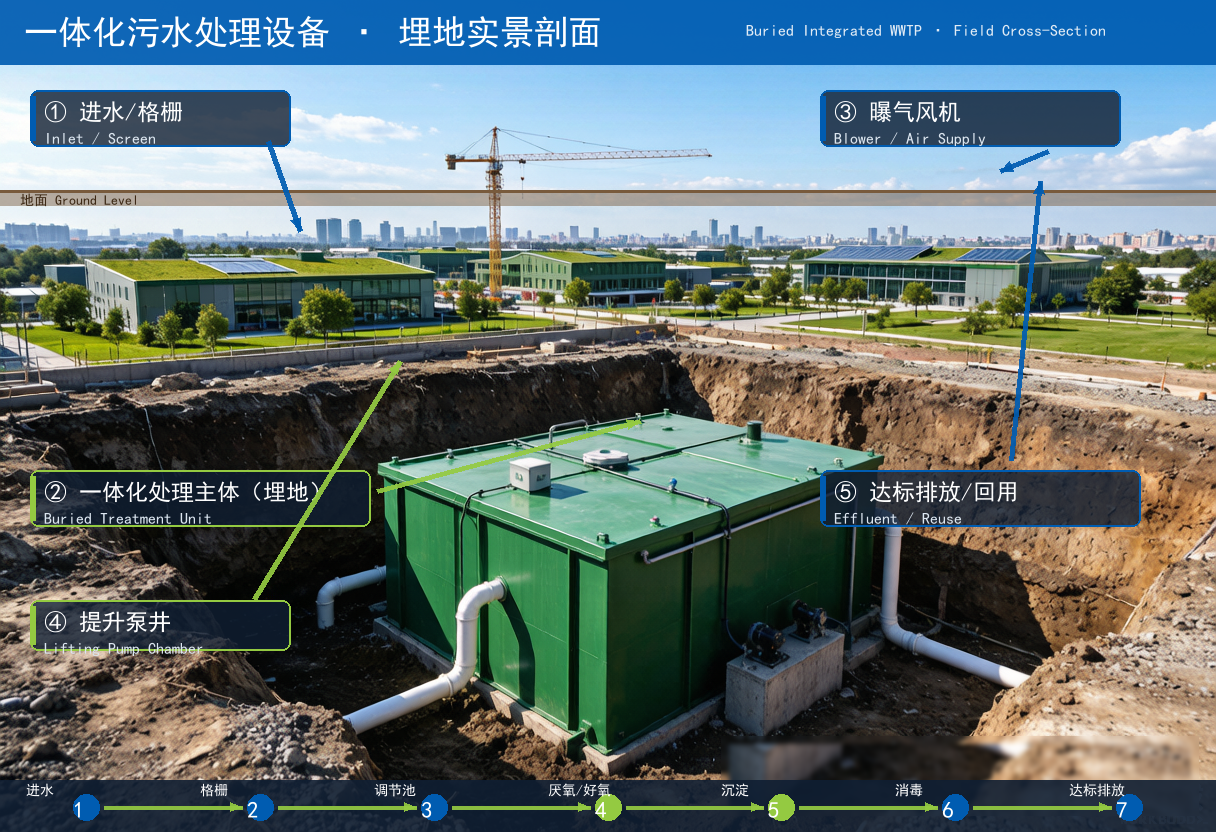
采用地埋式或模块化安装,施工快捷,不影响地面景观
Underground or modular installation enables quick construction without affecting ground landscaping
选用 A²O+MBR 等先进工艺,出水水质稳定,优于一级 A 标准
Advanced A²O+MBR processes deliver stable effluent quality exceeding Class IA standard
配置 PLC 全自动控制系统,可选配物联网远程监控,实现无人值守
PLC-based fully automatic control with optional IoT remote monitoring for unattended operation
壳体采用 PPH/HDPE 一次成型,耐腐蚀抗老化,使用寿命达 30 年以上
PPH/HDPE one-piece molded shell offers corrosion and aging resistance with a service life over 30 years
工艺流程 / Process Flow
采用 A/O 生物接触氧化法,流程细分为“预处理—生化反应—泥水分离”三大模块。污水首先经格栅和调节池去除悬浮物并均衡水质;随后进入厌氧池水解酸化,以改善可生化性;接着流入好氧池,通过微孔曝气供氧,借助填料上的生物膜高效降解 COD 与氨氮;最后进入沉淀池进行泥水分离,上清液经消毒后达标排放,底部部分污泥回流至厌氧池维持菌种浓度,多余污泥定期外排。
Adopts the A/O biological contact oxidation process, divided into three core modules: "pre-treatment — biochemical reaction — solid-liquid separation". Sewage first passes through a grille and equalization tank to remove suspended solids and balance water quality. It then enters the anaerobic tank for hydrolysis and acidification to improve biodegradability. Next, it flows into the aerobic tank, where micro-pore aeration supplies oxygen and the biofilm attached to the filler efficiently degrades COD and ammonia nitrogen. Finally, it enters the sedimentation tank for solid-liquid separation; the supernatant is disinfected and discharged up to standard, while part of the sludge is returned to the anaerobic tank to maintain bacterial concentration and excess sludge is regularly discharged.